

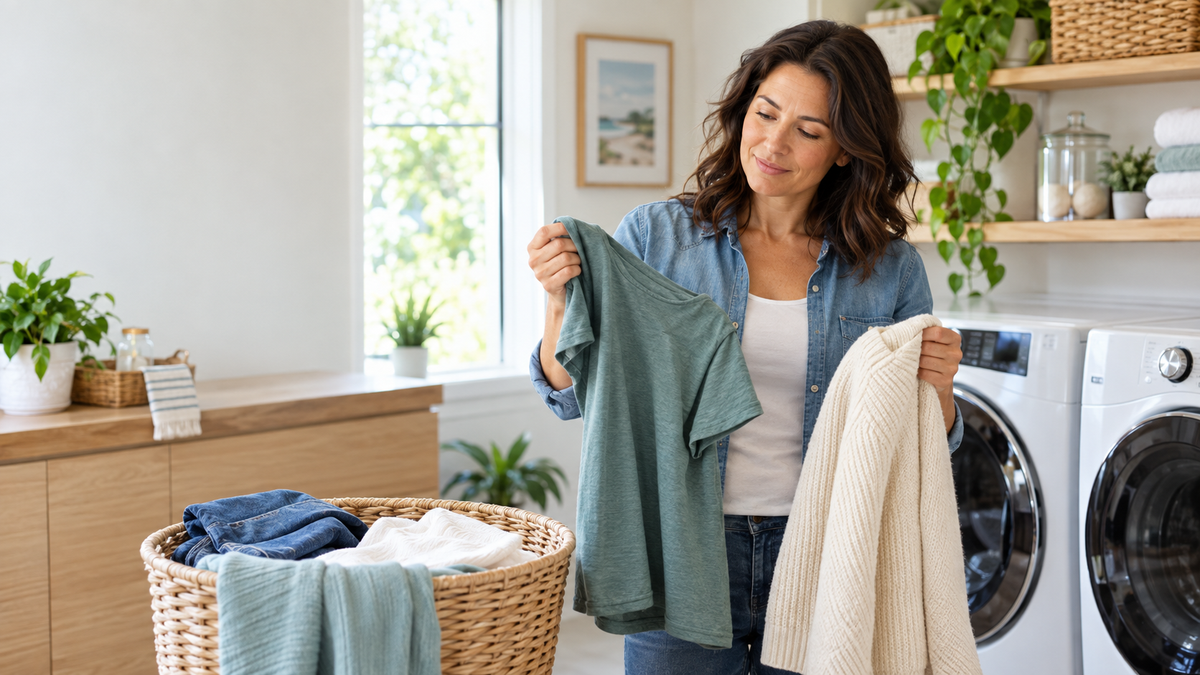
Preventing shrinkage doesn't require a shelf full of specialty products. It starts with knowing which clothes need extra care and making a few decisions before you press Start.
I have learned that the dryer isn't the only place a garment can lose its fit. Water temperature, washer movement, drying time, and even how you handle a damp item can all affect its final size. The goal is not to treat every load as delicate. It is to recognize the pieces you would hate to lose and give those garments a safer route through laundry day.
These habits are your first line of defense. And when shrinkage happens anyway, N-Seam Saver offers a simple way to help restore and maintain a garment's dimensions while it air-dries.
Start With a Two-Minute Sorting Habit
Before loading the washer, separate clothes by more than color; look at fabric, weight, and how much you care about preserving the original fit.
• Set aside fitted cotton shirts, sweaters, linen pieces, rayon garments, and anything labeled dry flat or tumble dry low.
• Keep heavy towels and jeans away from lightweight shirts. Heavy fabrics usually need more drying time and can keep lighter clothes tumbling in heat long after they are dry.
• Check unfamiliar or newly purchased garments before their first wash. The first few cycles are when an item is most likely to surprise you.
If you are unsure about a garment, treat it as shrink-prone until the care label tells you otherwise.
Use the Care Label as Your Laundry Map
The label answers four important questions: how warm the water can be, how much agitation the garment can tolerate, whether it belongs in a dryer, and whether it should be laid flat or hung to dry.
Follow the most cautious instruction when a garment contains more than one fiber. A cotton blend may seem sturdy, for example, but rayon, wool, or another sensitive fiber in that blend may determine how to wash it.
Control the Washer
For everyday loads containing shrink-prone clothing, cold water is the safest default. It reduces stress on fibers, helps preserve color, and lowers the chance that heat will contribute to contraction.
Cycle choice matters too. A normal or heavy-duty cycle creates more movement than many clothes need. Use a gentle or delicate cycle for sweaters, loosely woven fabrics, and garments that already fit close to the body. Leave enough room for clothes to move freely instead of packing the drum tightly.
A mesh laundry bag can also protect a special item from twisting around heavier pieces, although it does not replace the instructions on the care label.
Make the Dryer a Decision, Not a Default
Heat and time work together. Even a moderate setting can become a problem when clothes remain in the dryer too long.
· Choose low heat or an air-dry setting for garments you want to protect.
· Use the moisture sensor when your dryer has one.
· Check lightweight items before the full cycle ends and remove them as soon as they are dry.
· For high-risk garments, skip the dryer and reshape them while damp.
Paige's Tip: When I am unsure about the dryer, I remove the garment while it is slightly damp, smooth it back into shape, and let it finish drying naturally. That one-minute habit can prevent an unpleasant surprise.
Sweaters should usually dry flat so their weight doesn't pull them out of shape. Shirts and other structured garments can be smoothed and guided back toward their original dimensions before air drying.
A Quick Fabric Guide
|
Fabric |
Main Risk |
Safer Routine |
|
Cotton |
Heat and overdrying |
Wash cold. Use low heat, remove promptly, or air dry. |
|
Wool and cashmere |
Heat, moisture, and agitation |
Use the label-approved gentle method and lay flat to dry. |
|
Linen |
Heat and aggressive drying |
Wash cool and air dry or finish briefly on low heat. |
|
Rayon and viscose |
Weakness and distortion when wet |
Handle gently and follow the label closely. |
|
Blends |
The most sensitive fiber in the mix |
Base the routine on the fiber with the strictest care needs. |
Build a No Shrink Routine
The easiest prevention plan is one you can repeat without thinking:
• Check the label before the first wash.
• Sort out shrink-prone and lightweight garments.
• Wash cold unless the label directs otherwise.
• Choose less agitation when the fabric needs it.
• Use low heat, shorten the drying time, or air dry.
• Reshape special garments while they are still damp.
That small routine protects more than size. It can help clothes hold their shape, color, and finish longer, which means fewer favorite pieces are replaced before their time.
If Prevention Does Not Work
Even careful laundry habits cannot prevent every mishap. Someone else may move a load to high heat, a care label may be unclear, or a new garment may react differently than expected.
If an item shrinks, don't discard it immediately. Depending on the fabric and the amount of shrinkage, relaxing the fibers and gently restoring the garment's dimensions may improve the fit. That is the problem I created N-Seam Saver to address: holding a damp garment at controlled dimensions while it dries, without requiring you to stand there and keep pulling on it.
N-Seam Saver Makes the Process Simple
Set It. Stretch It. Let It Dry.
Attach the damp garment, adjust the system gradually to the desired dimensions, and let the garment dry naturally. Always follow the garment's care instructions and avoid overstretching.

N-Seam Saver helps hold a damp garment at the desired dimensions while it air-dries.
Frequently Asked Questions
Should I wash all clothes in cold water?
Cold water is a safe starting point for many everyday garments, but the care label should guide the final choice. Some items need a different temperature for proper cleaning or care.
Can clothes shrink without going into the dryer?
Yes. Warm water, agitation, and how you handle a wet garment can contribute to shrinkage or distortion. The dryer increases the risk, but it is not the only factor.
Is low heat completely safe?
Low heat reduces risk, but long exposure can still affect some fabrics. Remove clothes promptly and air-dry garments whose labels advise against machine drying.
Should sweaters be hung to dry?
Usually not. A wet sweater can stretch under its own weight. Reshape it gently and dry it flat unless the care label says otherwise.
What should I do when a favorite garment shrinks?
Stop applying heat. Check the fabric and care label, then choose a restoration method suited to that material. Work gradually because aggressive pulling can distort seams and shape.
Learn More
See how N-Seam Saver helps restore and maintain garment dimensions: Visit N-Seam Saver
Watch the product demonstration: See N-Seam Saver in Action
Related Articles
• How to Fix Clothes That Shrunk in the Wash


Share:
How to Fix a Shrunken Sweater